ON

THE
BODY
:
An Annotated Bibliography
Books & Media on Beauty, Eating Disorders, and the Body
An evolving, annotated bibliography of books and media about beauty, eating disorders, and the body. It contains a wide array of sources including adult and YA fiction, poetry, memoirs, and journalistic narratives. Each entry offers a brief reflection and citation to help readers choose the resource that best suits their needs, whether they are looking for entertainment, self-identification, or knowledge.
Suggest a title or get in touch at hello@onthebody-biblio.com

A novel for the tik-tok age. Belle is obsessed with skincare and the beauty of her mother Noelle. When Noelle mysteriously dies, Belle goes back to her childhood home in California to settle her mother’s affairs. There, she discovers the cult-like beauty spa her mother was involved in and becomes entangled herself. For individuals who want to read about complicated families and who can relate to self-esteem struggles regarding their appearance, specifically their skin.
Awad, M. (2023). Rouge: A novel (1st ed.). Marysue Rucci Books.

Rachel, 24, lives her life in the confines of her own restrictions. Namely, she travels the same roads, goes to the same places, and eats the same bland diet foods every day. When she stops talking to her mother, she meets Miriam, an attendant at her favorite frozen yogurt shop, and her world changes for the better. A bizarre, but literary book, for a reader who wants to understand what adulthood with an eating disorder might look like.
Broder, M. (2021). Milk fed: A novel (1st ed.). Scribner.
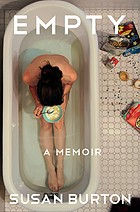
Empty is Susan Burton’s memoir on her obsession with food and binge eating disorder, an eating disorder more prevalent than anorexia or bulimia, but less researched. Burton tells her story with grace and silent fury, detailing how the anorexia she developed after her parents’ separation turned into a different compulsive eating disorder, a more common path than most people realize. Chosen for its discussion of binge-eating disorder, an often rarely discussed, but highly prevalent eating disorder.
Burton, S. (2020). Empty: A memoir (1st ed.). Random House.

A YA novel about a college student struggling with an eating disorder and bad relationship choices. When Jayne’s sister June calls and says she has cancer, Jayne’s previously disordered life is upheaved once again, only June needs her this time. Included in this bibliography for its nuanced portrayal of eating disorders and relationships. This book gives one version of what going to college with different struggles could look like and how to overcome them.
Choi, M. H. K. (2021). Yolk (1st ed.). Simon & Schuster BFYR.

Centers around Rose and Lily Winters, a pair of twins. Both women have struggled with their bodies since childhood in different ways. As Rose reaches her first anniversary in residential treatment for anorexia, she has to put aside her own problems and help her sister, who has been quietly struggling. Especially poignant for its lyrical language, close sister relationship, and queer themes.
Clarke, D. (2020). Thin girls (1st ed.). HarperCollins Publishers.

A seminal collection of essays on beauty culture and the pain often involved. In twelve essays, author Clein explains her history with eating disorders and self-harm, all while providing cultural context and theoretical research. This book was included because it has a different structure from the others and discusses many current cultural issues.
Clein, E. (2024). Dead weight: Essays on hunger and harm (1st ed.). Alfred A. Knopf.

A YA novel based on a true story told to the author. Jake is an alcoholic and a sports star. When a drunk driving injury threatens his place at NYU because he can no longer play sports, Jake takes an opportunity to befriend Erica, a girl with bulimia whose health is at risk, and to report on her to her father. Chosen for a realistic portrayal of emotions, inclusion of multiple common mental health concerns, and use of technological elements in storytelling.
Coburn, J. (2005). LoveSick. Dutton Books.

Isabelle is 13, and she has a problem. After her sister tells her mother about her eating disorder, Isabelle has to attend group therapy. In the group, she sees Ashley, the most popular girl at her school. From there starts a journey of self-discovery and moving beyond appearances. A resource for middle-grade and young adult readers looking to see themselves in literature.
Friend, N. (2004). Perfect (1st ed.). Milkweed Editions.

Kelly Gooch started as a beauty YouTuber, but now largely publishes content that is both critical of the beauty industry and self-care capitalism, while supportive of individual creativity and artistry. This video discusses trends in beauty and plastic surgery, while assuring viewers that there is beauty beyond these trends. This resource is included because it gives viewers an alternative, positive perspective on beauty.
Gooch, K. [KellyGooch]. (2025, March 25). The death of individual beauty [Video]. YouTube. https://www.youtube.com/watch?v=I335HSVSYU0

A remarkable journalistic feat reporting on the beauty culture in South Korea. Author Hu sheds light on k-beauty, directly from the source, including its product and surgery innovations, rate of self-care consumerism, and societal pressures. In this book, Hu attempts to answer the question: What is the future of beauty? A valuable resource for those interested in beauty culture, the Korean beauty landscape, technology, and/or cultural shifts.
Hu, E. (2023). Flawless (1st ed.). Penguin Publishing Group.

A book that focuses on the intersection between body horror and beauty culture. In the pursuit of perfection, the main character twists herself into something not altogether human. Also features highly relevant subjects like the failures of consumerism and cult behavior. A book for individuals who are looking for something more on the horror and speculative side.
Huang, L. L. (2023). Natural beauty: A novel (1st ed.). Dutton, an imprint of Penguin Random House LLC.
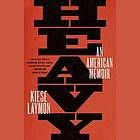
A beautiful memoir detailing one man’s experience and place in America. Kiese struggles with food. First with overeating, then undereating, and back again. He also struggles with gambling. All of these struggles stem from his childhood in Jackson, Mississippi, one in which he dealt with racism and sexual abuse. A novel more than worth reading, one worth celebrating both because of its content and its artistic prose. More than a book on any one topic, this resource was included because in it, a man tells his own story, his way, and many readers might be able to relate to Laymon’s narrative.
Laymon, K. (2018). Heavy: An American memoir (1st ed.). Scribner.

Sheer is the story of Reveal founder Maxine Thomas’ rise and subsequent fall in the beauty industry. Maxine details her origin story over the nine days while she awaits her company’s board to decide her fate after her own transgressions have finally come to light. This story mirrors the fall of other female-led businesses and CEOs and asks the question: Does being marginalized give you an allowance to mistreat others? A resource for readers who like unreliable narrators and ethical quandaries, all while getting the scoop on insider beauty information.
Lawrence, V. (2026). Sheer: A novel (1st ed.). Dutton.

My Good Bright Wolf by Sarah Moss is a memoir that plays with subject and form to tell an emotional true story of one woman’s struggles with beauty and self-control. Moss deconstructs her experience with gender roles and the health care system, all while encouraging the reader to tell their own story. The book is important because it uses figurative language and alternative storytelling methods to talk about body issues in a way that might resonate with certain readers more than more linear methods.
Moss, S. (2024). My good bright wolf: A memoir (1st ed.). Farrar, Straus and Giroux.

Hannah Louise Poston is a published poet and NYT contributor, tango dancer, and YouTuber. In this video, she takes on society’s obsession with youth in beauty and how we are all told to look younger before we are even considered ‘old’. Her examples cover both cosmetics and fashion and showcase the uniqueness and beauty of every stage in life. An excellent resource that encourages viewers to find beauty outside of the mainstream and embrace aging.
Poston, H. [HannahLouisePoston]. (2025, March 4). Deprogramming the obsession with youth [Video]. YouTube. https://www.youtube.com/watch?v=peukKl7msEQ

A book told completely in verse for middle-grade readers. Jake is a nice kid. He volunteers, loves his family, comics, skating, and singing. However, Jake also has a secret. He is starving himself. This novel tells the story of Jake’s experience in an eating disorder rehabilitation treatment center and is based on the author’s experience as a young teen. A resource particularly for young poetry lovers and boys with body image concerns.
Schu, J., & DiCamillo, K. (2025). Louder than hunger (1st ed.). Fischer Sauerländer.

An honest account of how hard it is to completely recover from an eating disorder. Mallary, now a professor, details how losing her mom at eleven led her to want to stop getting ‘bigger’, something she accomplished by severely limiting her eating. This book mixes reporting and memoir to tell how life goes on, even when recovery isn’t perfect. This was included in part because it features an up-to-date, current resource list for individuals struggling with body issues
Tarpley, M. T. (2025). Slip: Life in the middle of eating-disorder recovery (1st ed.). Simon Element.
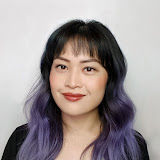
Michelle Wong has a doctorate in chemistry and works in cosmetic formulation. She created Lab Muffin Beauty, the website and YouTube channel, and wrote several books aimed at demystifying ingredients and dispelling falsehoods in the industry. Her goal with her site is to help the reader be an educated consumer. This website features several resources and blog posts about the science behind the industry, all designed to help individuals make informed choices in their daily routines and product selections.
Wong, M. (2026). Lab Muffin Beauty Science. https://labmuffin.com/